


A chemical peel can sound more intense than it feels in real life, especially if you have never had one before. Many people want brighter skin, smoother texture, fewer dark spots, or less visible acne scarring, but they also want to know what the appointment, peeling stage, and recovery will look like. A VI Peel is often chosen because it can address several common skin concerns with a planned at-home aftercare process and limited interruption to daily routines.
At Advanced Body and Laser Center, VI Peel treatment is offered for concerns such as fine lines, sun damage, acne scarring, hyperpigmentation, rough texture, and uneven tone. The treatment uses a medical-grade chemical peel blend that includes ingredients such as TCA, retinoic acid, salicylic acid, phenol, and vitamin C. These ingredients help exfoliate the skin and support a smoother, more even-looking surface as peeling progresses.
This blog explains what a VI Peel is, what happens during treatment, what the towelettes do, how VI Peel before and after changes may develop, and what to know about VI Peel cost.
What is a VI Peel? A VI Peel is a medium-depth chemical peel used to exfoliate the skin and improve visible tone and texture. It works through a blend of acids and skin-supporting ingredients that help loosen dull, damaged surface cells. As the skin peels over the following days, newer skin becomes visible.
A VI chemical peel may be used on the face, neck, chest, hands, arms, back, or shoulders. ABLC describes the treatment as an option for fine lines, wrinkles, sun damage, hyperpigmentation, acne, acne scars, rough skin texture, enlarged-looking pores, keratosis pilaris, and certain body concerns.
The treatment is popular because the appointment is relatively quick. ABLC notes that the procedure usually takes about 30 to 45 minutes. You leave with the peel solution still on your skin, then wash it off at the time your provider recommends.
VI Peel treatment affects both the outer and inner layers of the skin. The peel solution helps remove built-up dead skin cells and encourages cell turnover. This is the reason the visible peeling stage matters. Peeling is part of the process that helps dull or uneven surface cells shed.
The sensation during application is usually temporary. Many patients feel tingling, warmth, or mild stinging as the solution is layered onto the skin. The treatment is generally well tolerated, but your provider will review your skin history before starting.
Your skin may look slightly warm or shiny after the appointment. Peeling often begins within a few days. Some people peel lightly, and others peel more noticeably. The amount of peeling does not always predict the quality of the result, so the focus should stay on following aftercare.
Your visit begins with a skin assessment. Your provider reviews your skin concerns, recent treatments, product use, sun exposure, allergies, and goals. This step helps determine which peel formula may fit your skin.
On treatment day, your skin is cleansed to remove oil and debris. The VI Peel solution is then applied in layers. You may feel tingling as the ingredients contact the skin. The application itself is usually brief, and the full visit commonly takes less than an hour.
After the peel is applied, you leave with the solution on your skin. Your provider tells you exactly when to wash it off. You also receive aftercare products and instructions, including the use of post-peel towelettes, moisturizer, sunscreen, and gentle cleansing.
Many first-time patients ask, what do the VI Peel towelettes do? These towelettes are part of the post-peel system. They are used at specific times after the appointment to support the peel process and help the active ingredients continue working.
The towelettes can intensify exfoliation, so they should be used exactly as directed. Using them too often, leaving them on too long, or adding harsh skincare products may irritate the skin. Your provider’s instructions should guide timing and use.
The towelettes are one reason the at-home phase matters. A VI Peel is not finished when you leave the office. The aftercare kit helps guide the skin through the peeling period, and the way you care for your skin can affect comfort, dryness, and visible results.
VI Peel before and after results vary based on skin type, concern, peel formula, aftercare, and the number of treatments. Some people notice a brighter look once peeling settles. Others may see softer texture, fewer clogged pores, smoother-looking acne marks, or a more even tone.
Hyperpigmentation and acne scarring often take more than one session. Fine lines and roughness may improve gradually as the skin responds. Results are usually easier to judge after the peeling stage is complete and the skin has calmed.
Sun protection is critical after treatment. Freshly peeled skin can be more sensitive to UV exposure. Skipping sunscreen or getting too much sun can increase the risk of irritation or uneven pigment. Consistent aftercare helps protect the investment you made in treatment.
VI Peel Precision Plus is a formula often associated with pigment concerns. It may be recommended for visible discoloration, melasma, sun damage, or stubborn dark spots. The goal is to support a more even-looking complexion by addressing excess pigment and encouraging surface renewal.
Not every patient needs VI Peel Precision Plus. Some people may be better suited to another VI Peel option depending on acne, aging, sensitivity, or body area. ABLC’s consultation process helps match the peel type to the skin concern.
Pigmentation can be complex. Hormones, sun exposure, inflammation, acne, and skin tone can all affect discoloration. A provider may recommend a series of peels, home skincare changes, and careful sunscreen use for better pigment control.
Peeling often starts within a few days after treatment. ABLC notes that light to moderate peeling can occur over about 2 to 7 days. The skin may feel tight, dry, itchy, or mildly sensitive during this time.
Do not pull or pick peeling skin. Pulling loose skin can increase irritation and may raise the risk of uneven tone. Let the skin shed on its own. Moisturizer can help reduce dryness, and sunscreen is essential during the healing period.
Harsh skincare should be paused until your provider says it is safe to restart. This may include exfoliating acids, retinol, scrubs, and strong acne products. Makeup timing should also follow your provider’s instructions, especially during the first 24 hours.
How much is a VI Peel? Pricing can vary based on the provider, peel formula, treatment area, number of sessions, and any package or membership options. A face-only peel may be priced differently than a peel for the chest, back, or another body area.
Some patients ask about VI Peel cost because they are comparing it with facials, lasers, or microneedling. A peel is often priced per session, but a series may be recommended for acne scarring, melasma, or more stubborn discoloration. That can affect the total plan.
The most accurate way to answer how much a VI Peel costs is through a consultation. ABLC can evaluate your skin, recommend the right formula, and explain pricing before treatment begins.
A VI Peel may be a good option for people who want to address uneven tone, dullness, sun damage, acne scars, active acne, fine lines, rough texture, or enlarged-looking pores. ABLC states that VI Peel can be suitable for many skin types and tones.
Some people should avoid treatment or wait until a better time. ABLC notes that VI Peel may not be suitable for people who are pregnant or breastfeeding, have active skin infections, rashes, open wounds, recent cosmetic treatments that increase sensitivity, or known allergies to peel ingredients.
A consultation is the safest place to discuss medical history, medications, skincare products, recent sun exposure, and past reactions to peels. Your provider can recommend timing and prep steps based on your skin.
Preparation helps reduce unnecessary irritation. Your provider may ask you to pause exfoliating products, retinol, AHAs, BHAs, prescription acne products, or harsh treatments for several days before your appointment. ABLC recommends avoiding prolonged sun exposure before treatment.
Arrive with clean skin and tell your provider about any new breakouts, irritation, cold sores, medications, or recent procedures. Small details can affect whether treatment should move forward that day.
Good preparation also includes planning around your schedule. Peeling can be visible, so many patients avoid scheduling the treatment right before major photos, travel, weddings, or work events. A few days of visible flaking can be normal.
A VI Peel can be a strong option for people who want smoother texture, brighter-looking skin, fewer visible dark spots, or better control over acne-related marks. The treatment is quick in-office, but the at-home peeling phase plays a major role in comfort and results. The towelettes, moisturizer, sunscreen, and timing instructions all matter.
VI Peel before and after changes can be noticeable, especially when treatment is matched to the right concern and supported by consistent aftercare. VI Peel Precision Plus may be considered for pigment concerns, while other formulas may fit acne, aging, or texture goals.
If you are ready to find out which VI Peel option fits your skin, schedule a consultation with Advanced Body and Laser Center today.
A VI Peel is a medium-depth chemical peel used to improve visible tone, texture, acne, acne scarring, fine lines, sun damage, and hyperpigmentation.
ABLC states that the treatment usually takes about 30 to 45 minutes. You leave with the peel solution on and wash it off at the recommended time.
The VI Peel towelettes are part of the aftercare system. They support the peeling process and should be used only as directed by your provider.
VI Peel Precision Plus is a peel formula often used for pigment concerns such as dark spots, melasma, sun damage, and uneven tone.
VI Peel before and after changes may include brighter skin, smoother texture, less visible discoloration, and softer-looking acne marks after peeling ends.
VI Peel pricing varies based on formula, treatment area, provider, and treatment plan. A consultation gives the most accurate cost.
The cost can vary by session and by whether a series is recommended. ABLC can provide pricing after evaluating your skin and goals.
Most patients feel temporary tingling, warmth, or mild stinging during application. The treatment is generally well tolerated.
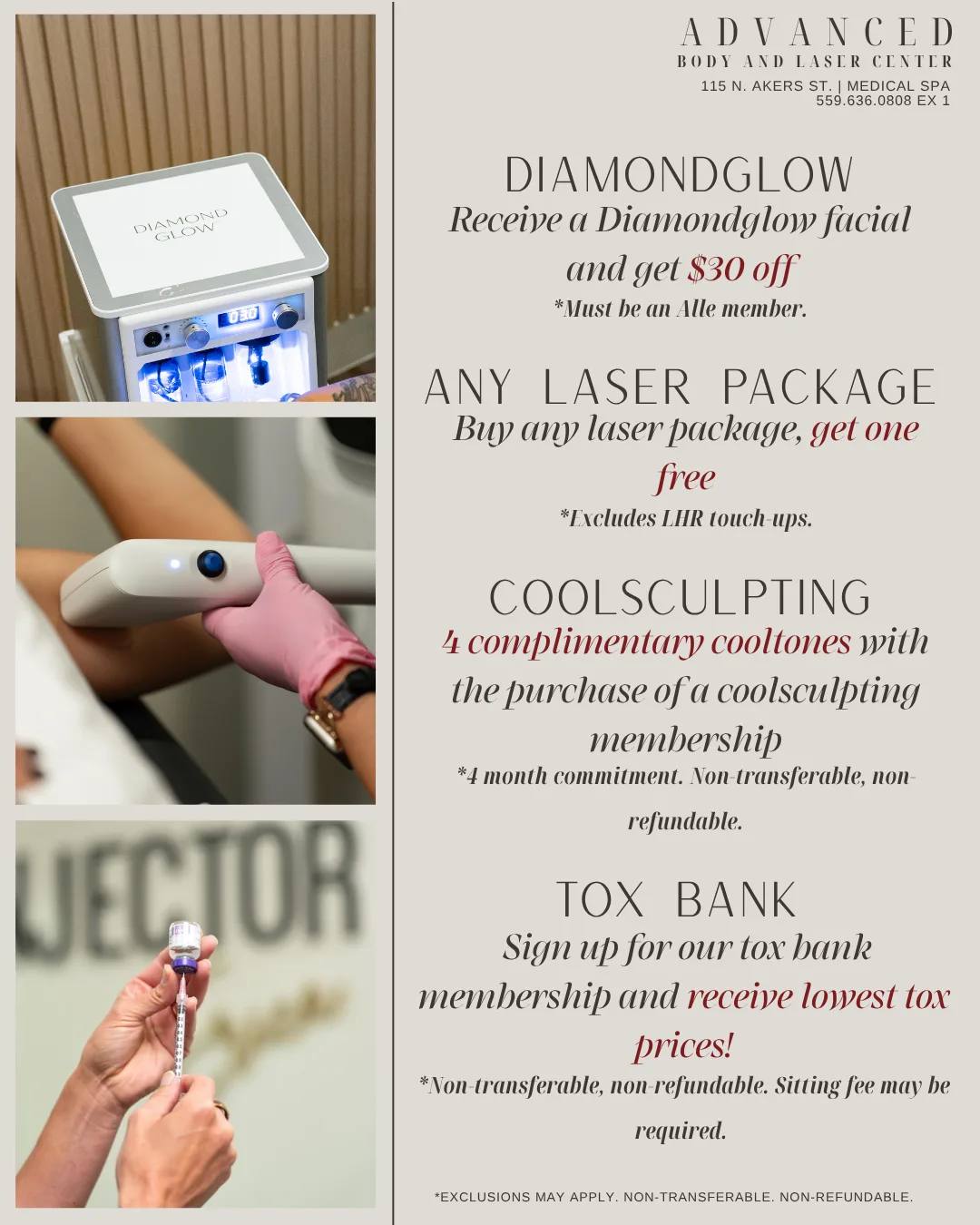
Hello, fall. This month, we’re making room for a little seasonal refresh with October favorites. Stock up with Tox Bank, treat your skin to DiamondGlow, sculpt with CoolSculpting, or save on any laser package. Consider this your sign to make a little time for you this fall.
Exclusions may apply. Promotions are non-refundable and non-transferable.
![Help! My Eyebrows Are Thinning [Steps to Take for Thicker Brows]](https://ablcvisalia.com/wp-content/uploads/2026/10/Help-My-Eyebrows-Are-Thinning-Steps-to-Take-for-Thicker-Brows.webp)

Discover your best self at Advanced Body & Laser. Whether you’re looking to rejuvenate your skin, sculpt your body, or simply feel more confident, our expert team is here to help. Schedule your consultation today and take the first step toward transformation.
Call ABLC at (559) 636-0808 for more information on booking an appointment, or fill out the form below and we will reach out to you!
