



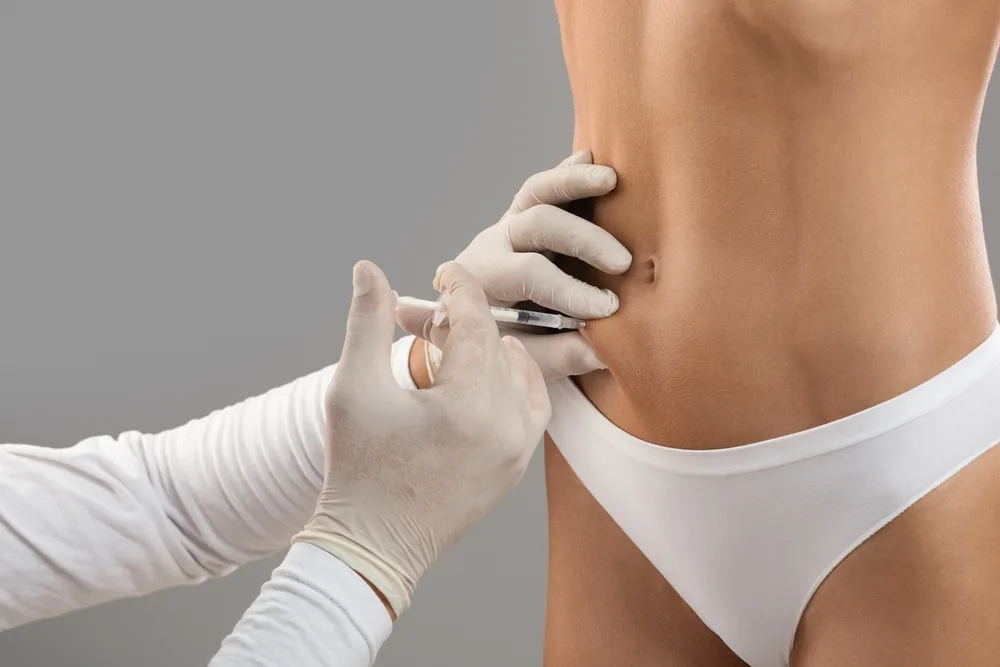
Tirzepatide injections can be a helpful part of a medically supervised weight loss plan, but technique matters. The medication is given under the skin once weekly, with the site, dose, timing, storage, and supplies set by your provider. If you are new to weight loss shots, it is normal to feel unsure about where to inject, how to handle the medication, or what to do if you are using a vial rather than a pen.
At Advanced Body & Laser Center in Visalia, Semaglutide and Tirzepatideweight loss injections are offered as part of a personalized medical weight management plan. Tirzepatide may help reduce appetite, support fullness, and improve metabolic function. Treatment includes consultation, a tailored plan, weekly injection guidance, and ongoing monitoring.
This guide explains how to inject tirzepatide safely, including stomach and thigh options, vial basics, site rotation, and common mistakes to avoid.
How to inject tirzepatide safely comes down to using the right dose, the right injection site, clean technique, and the schedule your provider gave you. Tirzepatide is injected under the skin, not into a muscle or vein. Common sites include the stomach, thigh, or the back of the upper arm when another person is helping.
Here is the basic process at a glance:
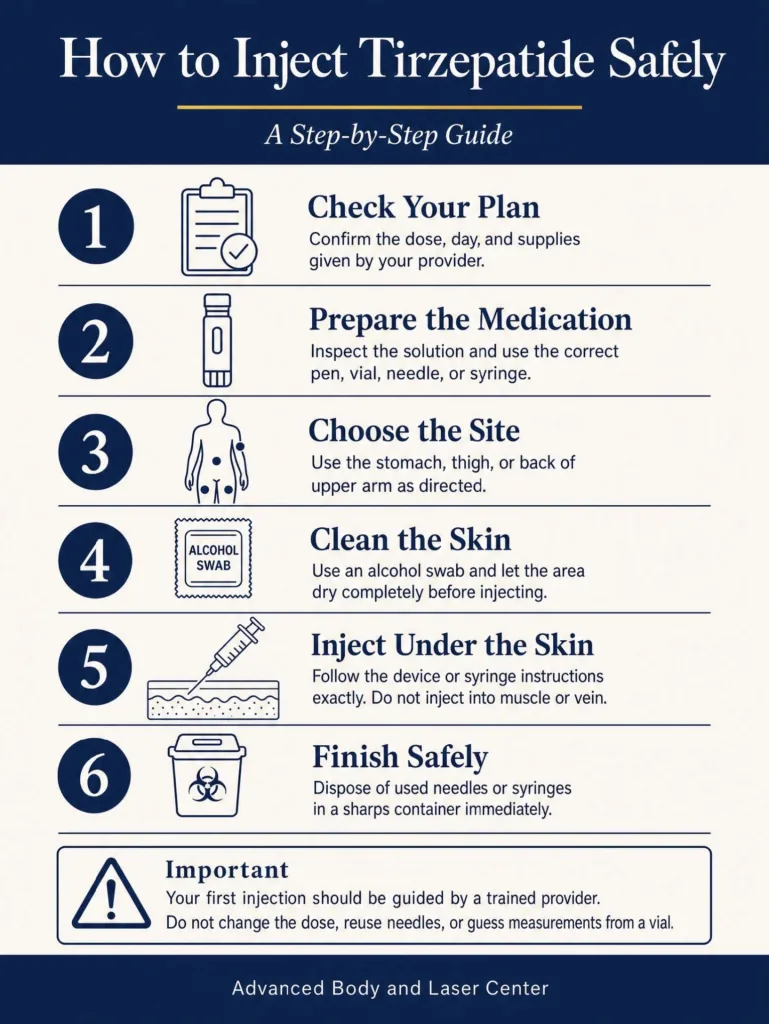
Tirzepatide works with appetite and metabolic signals. It is a dual GLP-1 and GIP receptor agonist, which means it acts on two hormone pathways involved in fullness, insulin response, blood sugar regulation, and appetite control.
Many patients notice appetite changes or improved portion control during treatment. Weight loss usually develops over time, especially when injections are paired with nutrition, movement, hydration, and regular medical check-ins.
At ABLC, weight loss shots are paired with a consultation, personalized treatment planning, weekly injection administration, and ongoing support. Medical structure matters because weight loss medication should fit your health history, goals, and response.
Tirzepatide is injected into fatty tissue under the skin. The common areas are the stomach, thigh, and back of the upper arm. The upper arm usually needs help from another person because it can be hard to reach safely on your own.
Choose skin that looks healthy. Avoid areas that are bruised, tender, scarred, irritated, hard, red, swollen, or close to a rash. Do not inject into the exact same spot each week. You can use the same body area again, such as the stomach, but choose a different spot within that area.
Site choice can also affect comfort. Some people prefer the stomach because it is easy to reach. Others prefer the thigh because the area feels more controlled while sitting. Your provider can help you choose a rotation pattern that feels practical.
Injecting tirzepatide in stomach tissue usually means choosing an area of the abdomen with enough soft tissue. Stay at least two inches away from the belly button. Avoid waistbands, scars, bruises, stretch marks that feel irritated, or areas where the skin is sore.
Once the site is ready, use the device or syringe method your provider taught you. If you are using a pen, follow the timing instructions for that device. If you are using a syringe, use only the amount your provider showed you how to measure.
A small drop of blood can happen. Press lightly with gauze or cotton. Do not rub the area.
Injecting tirzepatide in thigh tissue usually means using the front of the thigh where there is enough soft tissue. Sit down so the leg is relaxed. Choose an area away from the knee, groin, bruises, scars, or irritated skin.
The thigh can be a useful option for people who want a stable, easy-to-see area. Keep your hand steady and avoid rushing. The goal is a controlled subcutaneous injection using the same dose and technique you were trained to use.
If the thigh feels more tender than the stomach, talk with your provider. Some patients prefer one site over another, and your plan can often include rotation between approved areas.
Injecting tirzepatide from the vial should only be done after hands-on instruction from your provider. Vials require extra care because you may need to draw the medication into a syringe. The dose must be exact.
Check the vial label, dose, expiration date, and appearance of the liquid. The solution should look clear and colorless to slightly yellow. Do not use it if it looks cloudy, discolored, frozen, or has particles.
Wash your hands. Clean the rubber stopper with an alcohol swab. Use a new sterile syringe and needle every time. Draw up the prescribed dose exactly as taught, then inject under the skin in an approved site. Place the used needle and syringe in a sharps container right away.
If you are unsure about the dose line, needle size, storage, or injection steps, pause and contact ABLC before injecting.
Injecting tirzepatide at home should feel routine only after you have been trained. The goal is to make your weekly injection calm, organized, and consistent.
Choose a weekly injection day that is easy to remember. Store supplies together if your provider says they can be kept that way. Pick a clean, well-lit surface where you can focus without distractions. Check your medication before you begin so you are not handling supplies while uncertain about the dose or device.
A simple routine can also help you notice patterns. You may want to track your injection day, site used, appetite changes, side effects, and questions for your next check-in. Home injections should still stay connected to a monitored program, especially if your dose changes or you notice symptoms that feel unusual.
Many injection issues come from rushing. Do not inject through clothing. Do not use the same exact site every week. Do not inject into bruised, irritated, or painful skin. Do not rub the site afterward. Do not reuse a needle or syringe.
Never change your dose on your own. More medication does not mean faster or better weight loss, and dose changes can raise the chance of side effects. If the dose does not seem to be working, or if nausea, vomiting, diarrhea, constipation, reflux, or low appetite feels difficult to manage, talk with your provider.
Missed doses should also be handled through the instructions you were given. Do not take extra medication to make up for a missed injection unless your provider has told you to do so.
Mild injection-site redness, tenderness, or bruising can happen. Stomach-related side effects may also occur with tirzepatide, especially when treatment begins or the dose changes.
Contact ABLC if you have persistent vomiting, severe abdominal pain, signs of dehydration, allergic symptoms, worsening injection-site reactions, or anything that feels concerning. Seek urgent medical care for trouble breathing, swelling of the face or throat, severe abdominal pain that does not settle, or symptoms that feel sudden and serious.
Tirzepatide may not be suitable for everyone. ABLC screens for factors such as pregnancy, breastfeeding, thyroid cancer history, severe gastrointestinal conditions, allergies to GLP-1 medications, and other health considerations before treatment.
How to inject tirzepatide is not something you should have to figure out alone. A safer routine uses clear medical guidance, correct supplies, site rotation, careful technique, and follow-up support.
At ABLC in Visalia, weight loss injections are part of a personalized plan that may include Semaglutide or Tirzepatide, nutrition guidance, lifestyle support, weekly injection planning, and progress monitoring. Your provider can walk you through approved injection sites, vial instructions if needed, site rotation, and weekly routine support.
Book a weight loss injection consultation at Advanced Body & Laser Center in Visalia today to discuss Tirzepatide, injection training, and a supervised plan for your goals.
Tirzepatide is injected under the skin once weekly using the dose, device, and site instructions given by your provider.
Choose an abdominal area at least two inches from the belly button and inject using the method your provider taught you.
Use the front of the thigh, away from irritated or bruised skin, and keep the leg relaxed during the injection.
Home injection should happen only after training. Use a consistent weekly routine and keep treatment connected to provider monitoring.
Use a new sterile syringe and needle, draw the prescribed dose exactly as taught, and place sharps in a proper container.
Tirzepatide can be injected into the stomach, thigh, or back of the upper arm. Another person should inject the upper arm.
Tirzepatide is typically injected once weekly, at the schedule and dose set by your provider.
Yes. Rotate injection sites each week and avoid using the same exact spot for each dose.

Hello, fall. This month, we’re making room for a little seasonal refresh with October favorites. Stock up with Tox Bank, treat your skin to DiamondGlow, sculpt with CoolSculpting, or save on any laser package. Consider this your sign to make a little time for you this fall.
Exclusions may apply. Promotions are non-refundable and non-transferable.
![Help! My Eyebrows Are Thinning [Steps to Take for Thicker Brows]](https://ablcvisalia.com/wp-content/uploads/2026/10/Help-My-Eyebrows-Are-Thinning-Steps-to-Take-for-Thicker-Brows.webp)

Discover your best self at Advanced Body & Laser. Whether you’re looking to rejuvenate your skin, sculpt your body, or simply feel more confident, our expert team is here to help. Schedule your consultation today and take the first step toward transformation.
Call ABLC at (559) 636-0808 for more information on booking an appointment, or fill out the form below and we will reach out to you!
